A quote you love

No name or email needed.

A LITTLE RHYTHM

You found the beat.

Click a highlighted key or press it on your keyboard.

QWERTYUIOP
GH
ZXCVBNM

Hi there! I’m Berk, an Applied Scientist at Amazon, where I work on agentic AI.

I obtained my PhD in Electrical and Computer Engineering at University of Southern California (USC). I was fortunate to be advised by Prof. Mahdi Soltanolkotabi at the USC Center on AI Foundations for Science (AIF4S).

Previously, I was an undergraduate student in the Department of Electrical and Electronics Engineering at Bilkent University, where I worked in Imaging and Computational Neuroscience Laboratory (ICON Lab) in National Magnetic Resonance Research Center under the supervision of Prof. Tolga Çukur with a focus on deep learning for accelerated MRI synthesis and reconstruction.

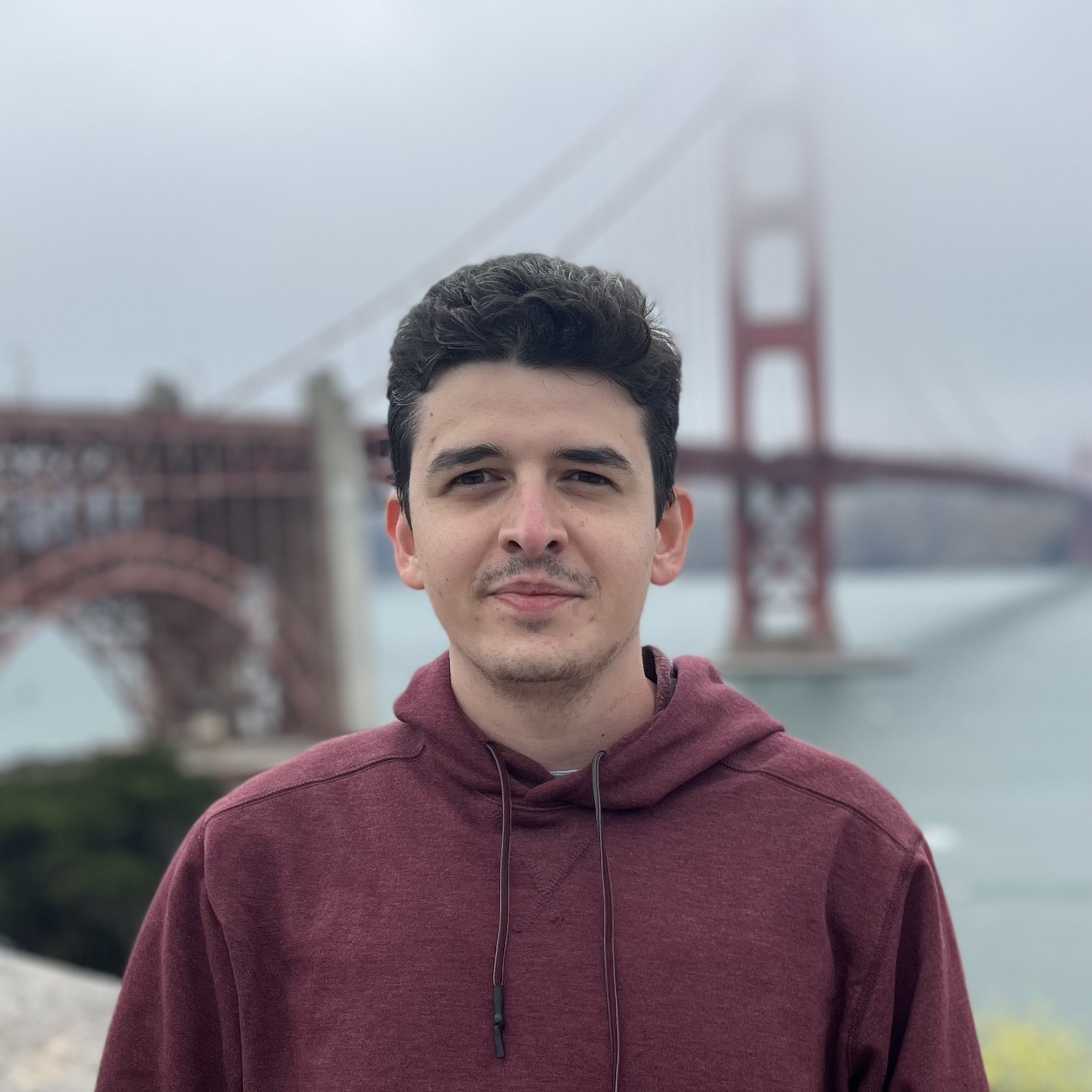
Portrait of Berk Tınaz

Research

I am passionate about post-training strategies to improve visual reasoning in Multimodal Large Language Models (MLLMs), with a focus on enhancing how models process and reason over complex visual data. A central goal of my work is to address limitations such as the lack of mental visualization, which we revealed in our recent benchmark Hyperphantasia (NeurIPS 2025).

Previously, my research spanned mechanistic interpretability, inverse problems, large language models, and learning theory, approaching machine learning problems from both practical and theoretical perspectives. Using sparse autoencoders (SAEs), I studied how human-interpretable concepts emerge and evolve across reverse diffusion steps in diffusion models (NeurIPS Spotlight 2025). I developed diffusion-based methods for inverse problems—including denoising and deblurring—in our works Adapt-and-Diffuse (ICML Spotlight 2024) and DiracDiffusion (ICML 2024). I also worked on a transformer–convolution hybrid architecture achieving state-of-the-art performance on the fastMRI dataset: HUMUS-Net (NeurIPS 2022). On the theory side, I analyzed the gradient descent dynamics of learning linear target functions with shallow ReLU networks in our work When Both Layers Learn (COLT 2026).

I also have extensive experience working with large language models (LLMs), including fine-tuning, continual pretraining, post-training, prompting, and evaluation. During my 2024 internship at Amazon, I worked on knowledge injection into LLMs through continual pretraining with DoRA adapters and retrieval-augmented generation. In my 2025 Amazon internship, I developed a novel approach for extracting use-case–adaptive embeddings from LLM hidden states for downstream applications. I have additionally explored improving mathematical reasoning in LLMs via self-feedback and self-revision loops, without relying on external verifiers.
Selected Work

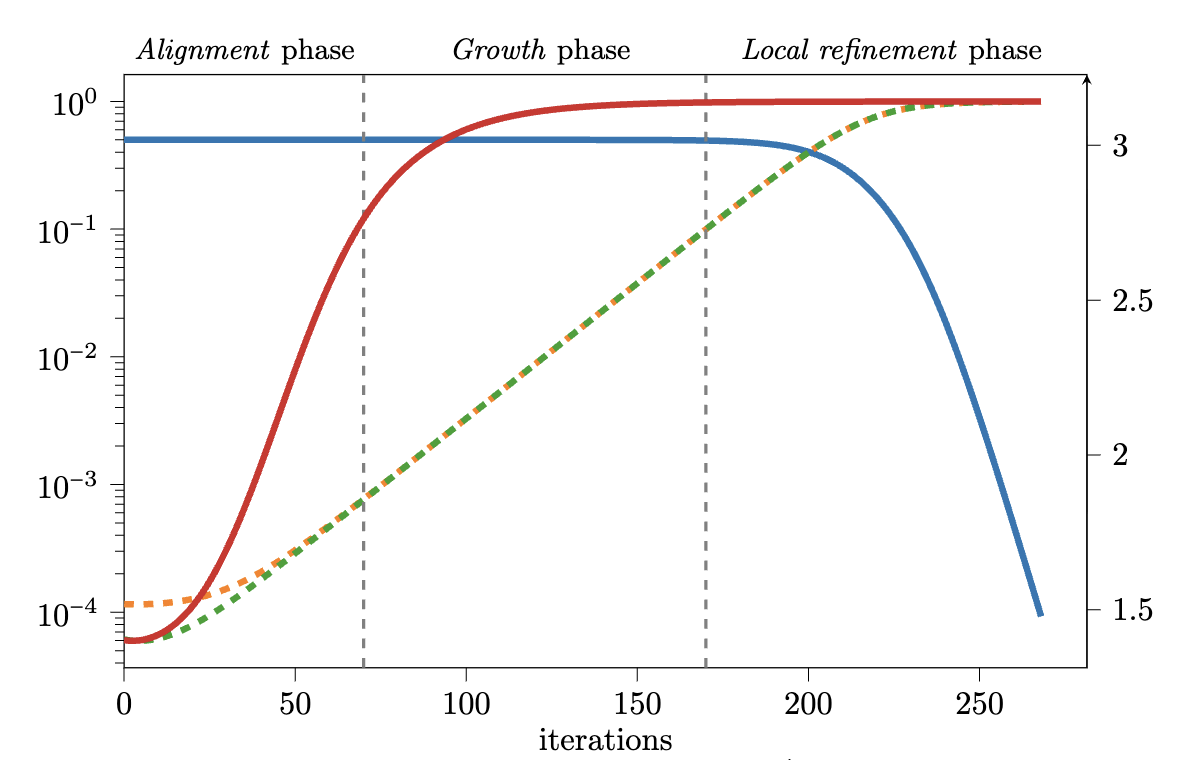
Training dynamics over alignment, growth, and local refinement phases

COLT · 2026

When Both Layers Learn: Training Dynamics of Representing Linear Models via ReLU Networks

Berk Tınaz, Changzhi Xie, Mahdi Soltanolkotabi

We analyze gradient descent when both layers of a one-hidden-layer ReLU network learn a linear target. We characterize the optimization landscape and show that small random initialization converges to a global minimizer at a linear rate with order-wise optimal sample complexity.

Diffusion model concepts illustration

NeurIPS · 2025 Spotlight
CVPR VisCon · 2025 Spotlight Best Paper Honorable Mention
GMCV Workshops · 2025

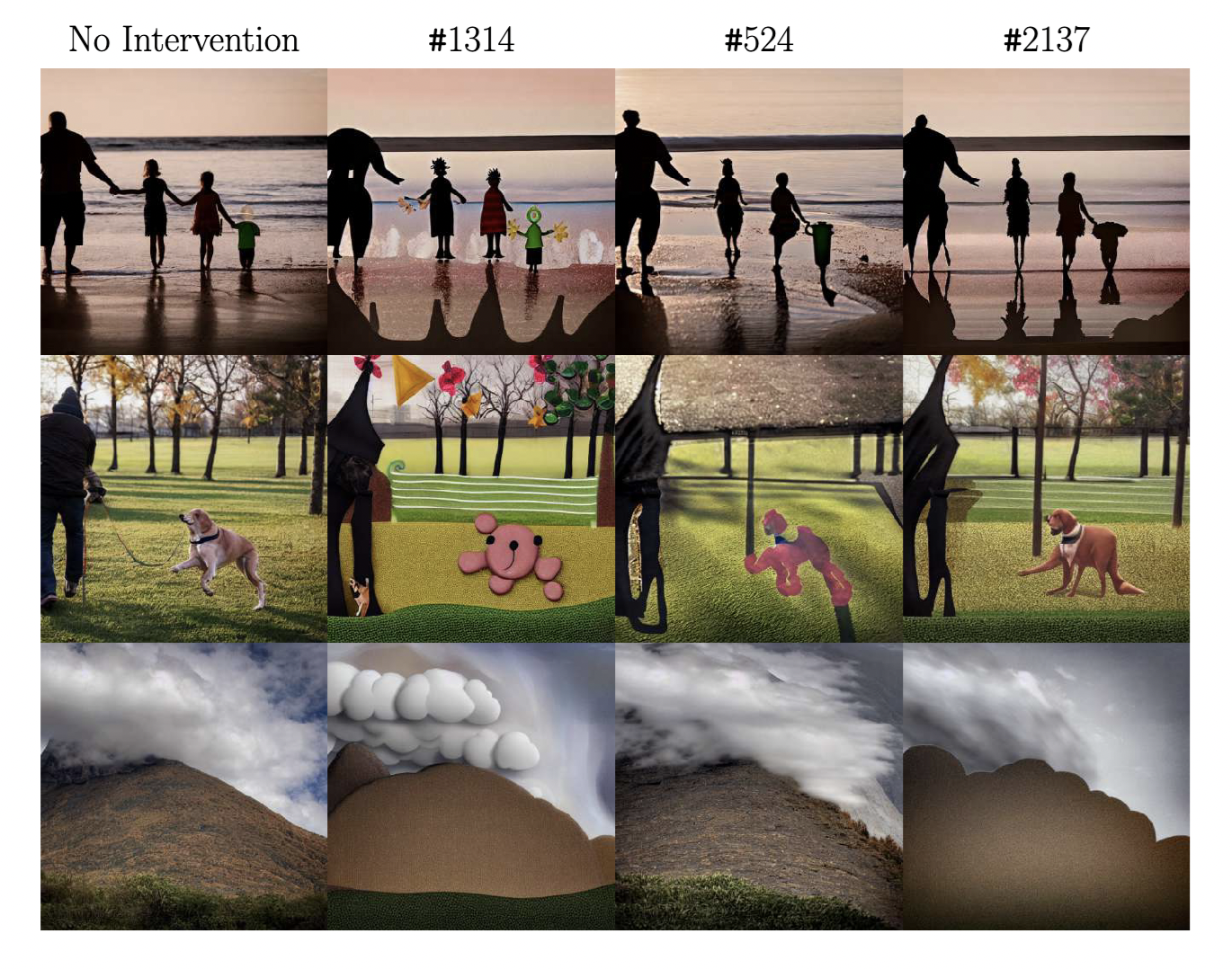
Emergence and Evolution of Interpretable Concepts in Diffusion Models

Berk Tınaz*, Zalan Fabian*, Mahdi Soltanolkotabi (* equal contribution)

Using sparse autoencoders (SAEs), we investigate how human-interpretable concepts evolve in diffusion models through the generative process. Furthermore, we demonstrate that these concepts can be manipulated to steer image generation.

Hyperphantasia benchmark illustration

NeurIPS · 2025

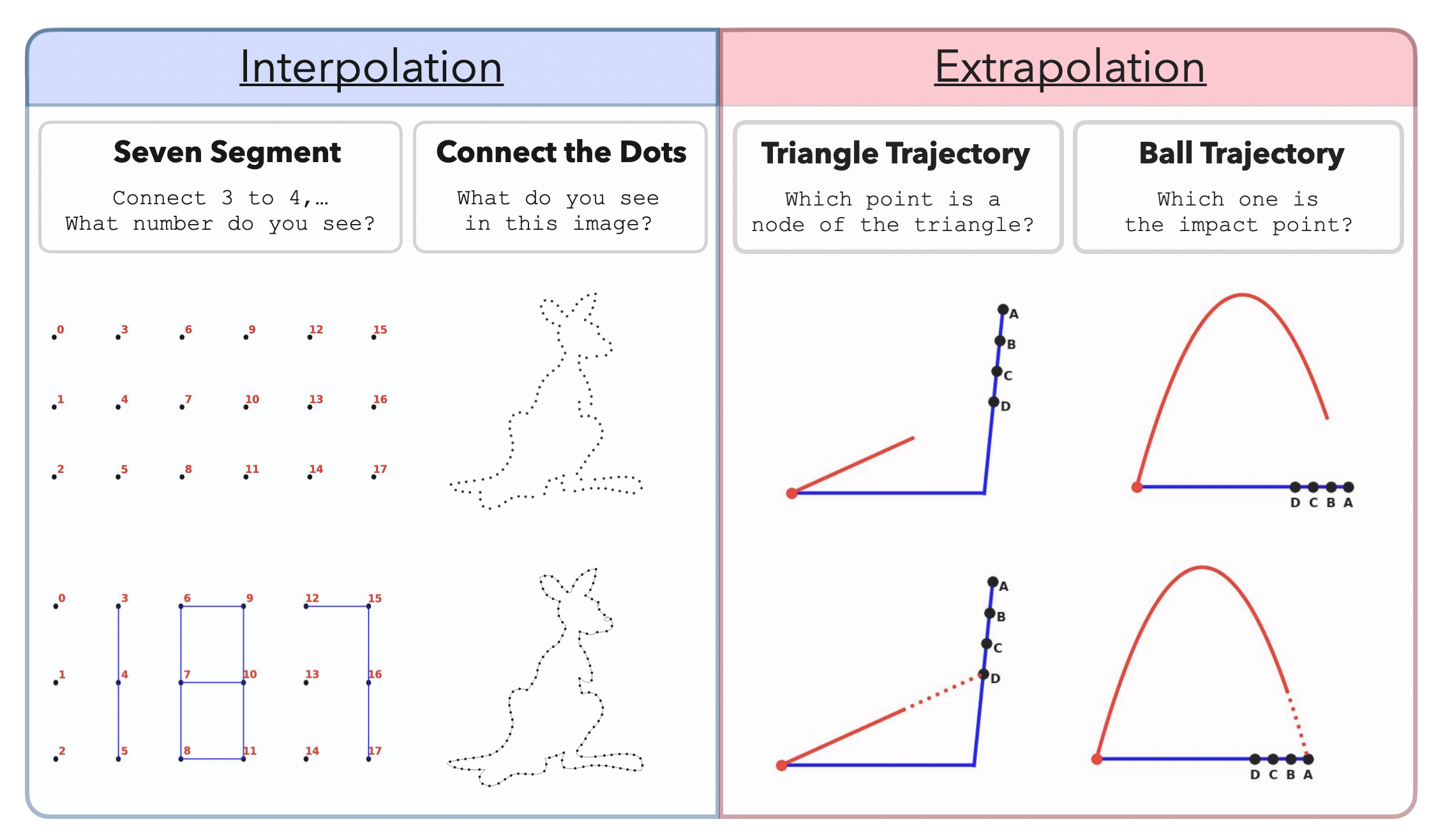
Hyperphantasia: A Benchmark for Evaluating the Mental Visualization Capabilities of Multimodal LLMs

Mohammad Shahab Sepehri, Berk Tınaz, Zalan Fabian, Mahdi Soltanolkotabi

We introduce Hyperphantasia, a benchmark to evaluate the mental visualization capabilities of multimodal large language models (MLLMs). We demonstrate a substantial gap between the performance of humans and state-of-the-art MLLMs.

Adapt and Diffuse paper illustration

ICML · 2024 Spotlight
NeurIPS Deep Inverse Workshop · 2023

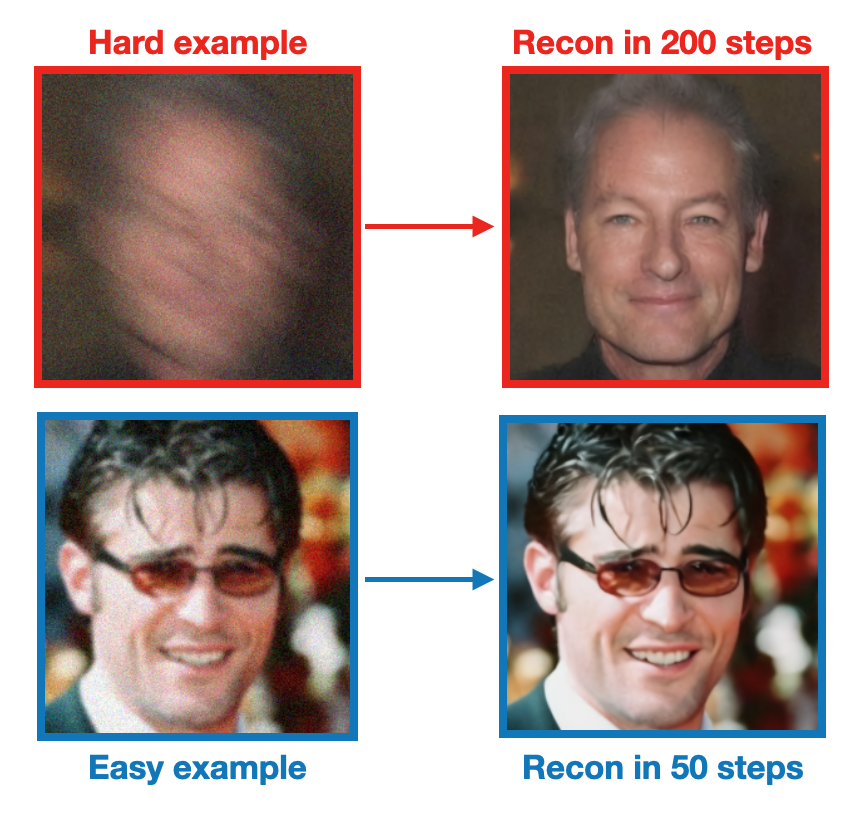
Adapt and Diffuse: Sample-adaptive Reconstruction via Latent Diffusion Models

Zalan Fabian*, Berk Tınaz*, Mahdi Soltanolkotabi (* equal contribution)

Latent diffusion based reconstruction of degraded images by estimating the severity of degradation and initiating the reverse diffusion sampling accordingly to achieve sample-adaptive inference times.

DiracDiffusion paper illustration

ICML · 2024

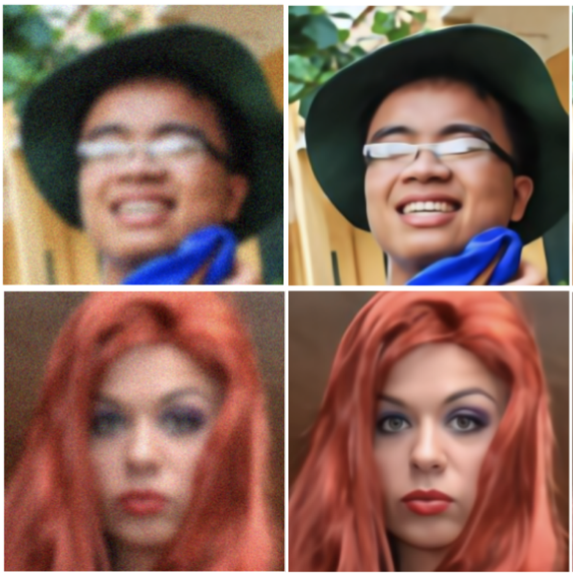
DiracDiffusion: Denoising and Incremental Reconstruction with Assured Data-Consistency

Zalan Fabian, Berk Tınaz, Mahdi Soltanolkotabi

Novel framework for solving inverse problems that maintains consistency with the original measurement throughout the reverse process and allows for great flexibility in trading off perceptual quality for improved distortion metrics and sampling speedup via early-stopping.

HUMUS-Net paper illustration

NeurIPS · 2022

HUMUS-Net: Hybrid Unrolled Multi-scale Network Architecture for Accelerated MRI Reconstruction

Zalan Fabian, Berk Tınaz, Mahdi Soltanolkotabi

A hybrid architecture that combines the implicit bias and efficiency of conbolutions with the power of Transformer blocks in an unrolled and multi-scale network to establish SOTA on fastMRI dataset.

News

  • “When Both Layers Learn” accepted to COLT 2026.
  • Started full-time at Amazon as an Applied Scientist.
  • Received the Best Research Assistant award and was named a finalist for the William F. Ballhaus, Jr. Prize.
  • Defended my PhD thesis.
  • “Emergence and Evolution of Interpretable Concepts in Diffusion Models” accepted as a NeurIPS Spotlight.
Earlier news (10)
  • Presented at CVPR Visual Concepts workshop; our paper received a Best Paper Honorable Mention.
  • Recognized as a top reviewer for ICML 2025.
  • Returning to Amazon as an Applied Science intern.
  • Passed my qualification exam and became a PhD candidate.
  • Visiting Simons Institute for the semester.
  • Wrapped up my Amazon internship.
  • DiracDiffusion and Adapt-and-Diffuse accepted to ICML 2024.
  • Joining Amazon in San Diego as an Applied Science Intern for summer 2024.
  • Obtained my M.Sc. degree in Electrical Engineering.
  • Website went live; received offers from UCLA, USC, and UBC.

NICE FIND

You found the easter egg!